
NATIONAL HAMMOCK DAY
Fast Facts
- WHEN
- Celebrated each year on July 22nd
- WHAT
- Encourage everyone to relax in the shade on a hammock
- STAT
- hammocks have become an essential element of survival for modern adventurers
- VIBE
- Relaxing, tranquil, peace
NATIONAL HAMMOCK DAY
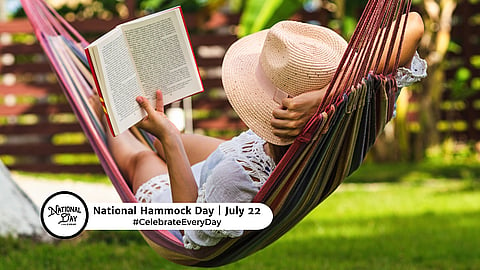
July 22 is National Hammock Day and we are encouraging everyone to relax in the shade by creating a tranquil napping space. Whether you set your hammock up under a tree or on your balcony, find a spot and enjoy the feeling of swaying lightly in the peace and quiet.
#NationalHammockDay
A hammock is a sling made of fabric, rope or netting. When suspended between two points, a hammock forms a sling used for swinging, sleeping or resting. We usually suspend a hammock between trees or posts. Because hammocks are portable, you can take a hammock wherever you go...just in case you find a spot that looks enticing.
The hammock dates back thousands of years to Central America where it protected people from creatures and dirt. However, the netted bed didn't make its way to Europe until explorers brought it back in the 17th century. Not long after, the hammock found its way onto naval ships, providing comfort and maximizing space.
Did you know?
The word hammock comes from the Taino culture of the Caribbean. They called it a hamaca, which translated to "stretch of fish net." The earliest versions were woven from the bark of the Hammack tree, which naturally repelled insects.
After swaying across the oceans, the hammock eventually became a more leisurely item. Made from a variety of fabrics, it is suspended between trees in backyards and at lake cabins. Easily packed into a backpack, hammocks have become an essential element of survival for modern adventurers. Hikers, campers, and mountain climbers added the light and compact sleep sling to their kits.
If the leisure of hammocks seems ho-hum to you, don't go the relaxing route. Extreme hammocking puts the adventure into your rest and relaxation. Thrill-seekers sleep in hammocks hundreds of feet above a canyon floor.
Hammock Facts
Disease Prevention
When the British Royal Navy adopted hammocks in the late 16th century, it wasn't just to save space. Sleeping suspended off the damp wooden decks drastically reduced soldiers' exposure to rodents, fleas, and standing water, successfully curbing the spread of deadly diseases like yellow fever.
Sleep Security
A Swiss study found that the gentle, rocking motion of a hammock synchronizes brain waves. This allows people to fall asleep faster and transitions them into a much deeper state of NREM (non-rapid eye movement) sleep compared to a stationary bed.
Scientific Exploration
Hammocks have left the planet. During the Apollo program, astronauts Neil Armstrong and Buzz Aldrin actually utilized specially designed lunar module hammocks to get some rest while sitting on the surface of the Moon, as there were no beds on board.
Whether you use a hammock to take a nap or as a convenient tool in your camping kit, National Hammock Day on July 22 recognizes one innovative way to catch some sleep.
HOW TO OBSERVE NATIONAL HAMMOCK DAY
Hang up your hammock and take a nap. Use your own or borrow a hammock to celebrate. Host a hammock event, encouraging others to relax in the great outdoors. Share photos of your hammock experience by posting on social media using #NationalHammockDay.
Hammock Research Ideas
-
Do you sleep better in a hammock or in a bed?
-
Which is easier to pack, a hammock or an air mattress?
-
Sticking to our hammock vs. air mattress test, which is easier to set up?
-
Manufacturers make hammocks out of a variety of materials; Which one do you prefer?
-
Which is easier to get out of—a hammock or a standard mattress?
NATIONAL HAMMOCK DAY HISTORY
National Day Calendar is researching the origins of this relaxing holiday.