NATIONAL METEOR WATCH DAY
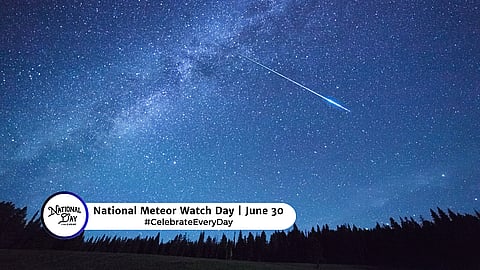
NATIONAL METEOR WATCH DAY
Every year on June 30, National Meteor Watch Day invites us to step outside, turn our eyes to the heavens, and witness one of the night sky’s most thrilling magic shows. It’s the perfect excuse to slow down, look up, and catch the fleeting glow of a falling star.
#NationalMeteorWatchDay
Despite their dramatic appearance, most meteoroids that cause meteors are no larger than a pebble! When these tiny pieces of space debris enter Earth's atmosphere, intense friction causes the surrounding air to become scorching hot. That brilliant "shooting star" you see is actually a meteor streaking through a pocket of superheated, flaming air.
We usually spot meteors when they are about 34 to 70 miles above Earth. Once they dip down to 31–51 miles, they typically disintegrate entirely. The average glow time for a meteor is just one single second! On rare occasions, a meteoroid will graze the atmosphere and skip right back out into deep space like a stone across water.
Did you know you could get a list of meteor shower dates?
Yes! A list can be found on the EarthSky website. The site is also a guide to help you have a successful watch!
Perseids
In the Northern Hemisphere, one of the most spectacular meteor showers in the Northern Hemisphere is: The Perseids. Named after the constellation Perseus where the majority of the activity takes place, particles released by the comet 109P/Swift-Tuttle cause the meteors to shower down onto Earth.
Perseids is active from mid-July to late August and occurs when Earth passes through the debris left behind by Comet 109P/Swift-Tuttle. On a clear night with a new moon, the Perseids can put on a dazzling display of more than one meteor per minute!
Colors of the Meteoroid
The chemical composition and the speed of the meteoroid will cause different hues to the light. Possible colors and elements producing them include:
Orange/yellow - Sodium
Yellow - Iron
Blue/green - Copper
Purple - Potassium
Red - Silicate
National Meteor Watch Day is an excellent time to plan for a meteor-watching party. Whether we catch a few stray falling stars or witness an entire meteor shower, this day calls for an evening with friends and family under the stars. Identify the constellations while waiting to make a wish or two. Sounds like a romantic night, as well.
HOW TO OBSERVE NATIONAL METEOR WATCH DAY
National Meteor Watch Day is the ultimate reason to host a backyard stargazing party. Whether you catch a lone stray streak or a brilliant flash of color, spending an evening under the stars with friends and family is a flawless way to spend a summer night.
Grab a cozy blanket, some lawn chairs, and your favorite snacks. Head away from bright lights to a spot with an open view of the sky. Once you get to your destination, give your eyes about 20 minutes to adjust to the darkness. Spot constellations while you wait for a meteor shower, make a few wishes, and share your experience online using the hashtag #NationalMeteorWatchDay.
HISTORY OF NATIONAL METEOR WATCH DAY
Within our research, we were unable to identify the creator of National Meteor Watch Day.
Shop this day
What's Next